When you want your dog on your wedding details, there are two questions to answer: will the image feel like your dog, and will it work on the object you are ordering? A favorite photograph and a custom illustration can both be good choices. The better fit depends on the image, the size, the material, and the style of your wedding.
Start with what you love about the picture. If it is a particular moment, you may want to preserve the photograph. If it is the tilted ear, the serious expression, or the markings around the eyes, an illustration gives an artist room to interpret those features for a new format.
When a photograph is the right choice
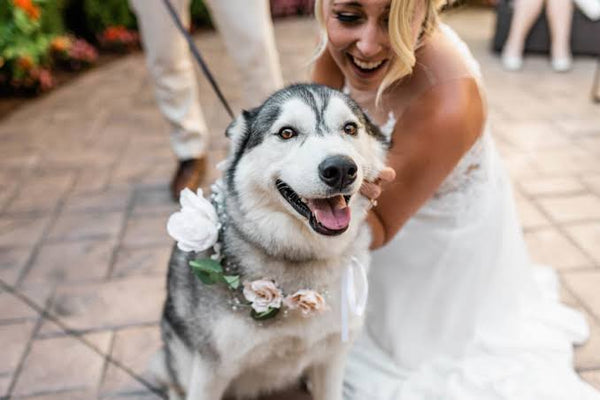
A photograph keeps the actual light, place, and moment. The muddy tennis ball, the old sofa, or the way your dog leaned into you might be the reason the image matters. A framed portrait beside the guest book, a program photograph, or a small gallery at the entrance gives those details room to tell their story.

Photo printing can also work on smaller wedding products when the source image, crop, material, and printing method suit one another. Ask to see comparable finished work from the supplier. There is no useful rule that every photograph will look muddy or every illustration will reproduce beautifully.
What an illustration can change
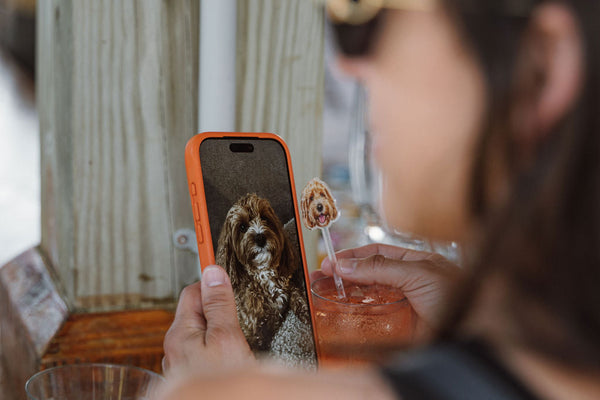
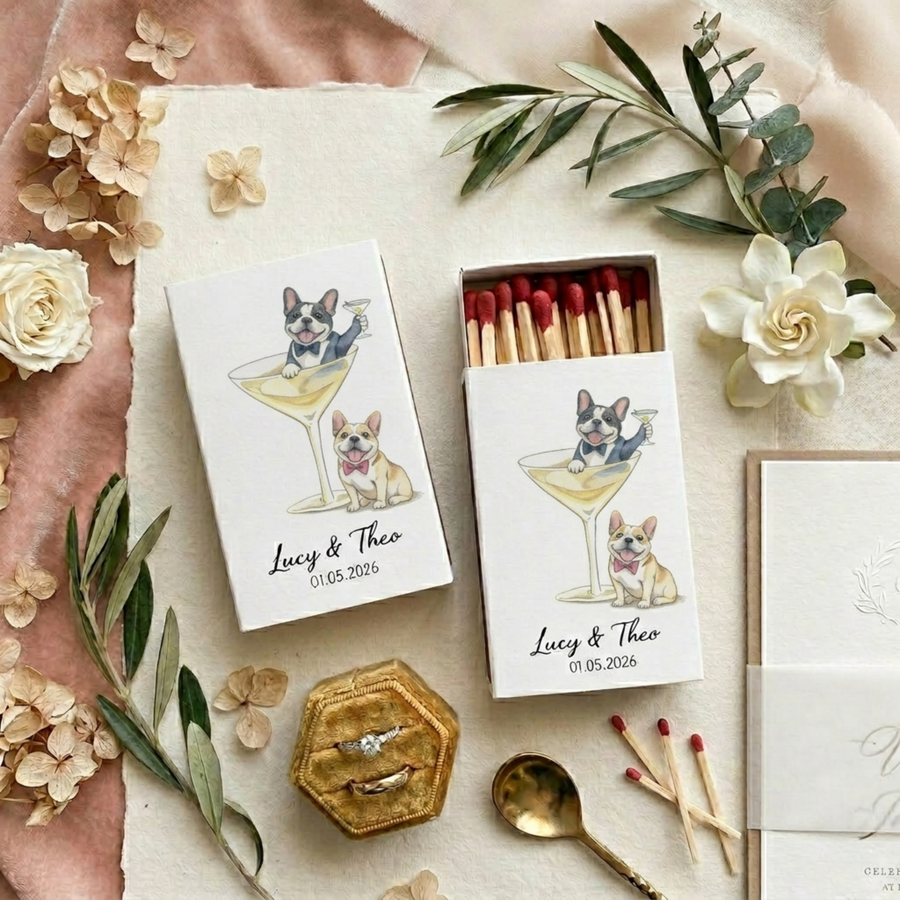
An artist can simplify the background, emphasize the proportions you recognize, and develop a color treatment that works with the wedding. That flexibility is useful when the portrait needs to share a napkin with a short line of wording or remain recognizable on a small acrylic stirrer.
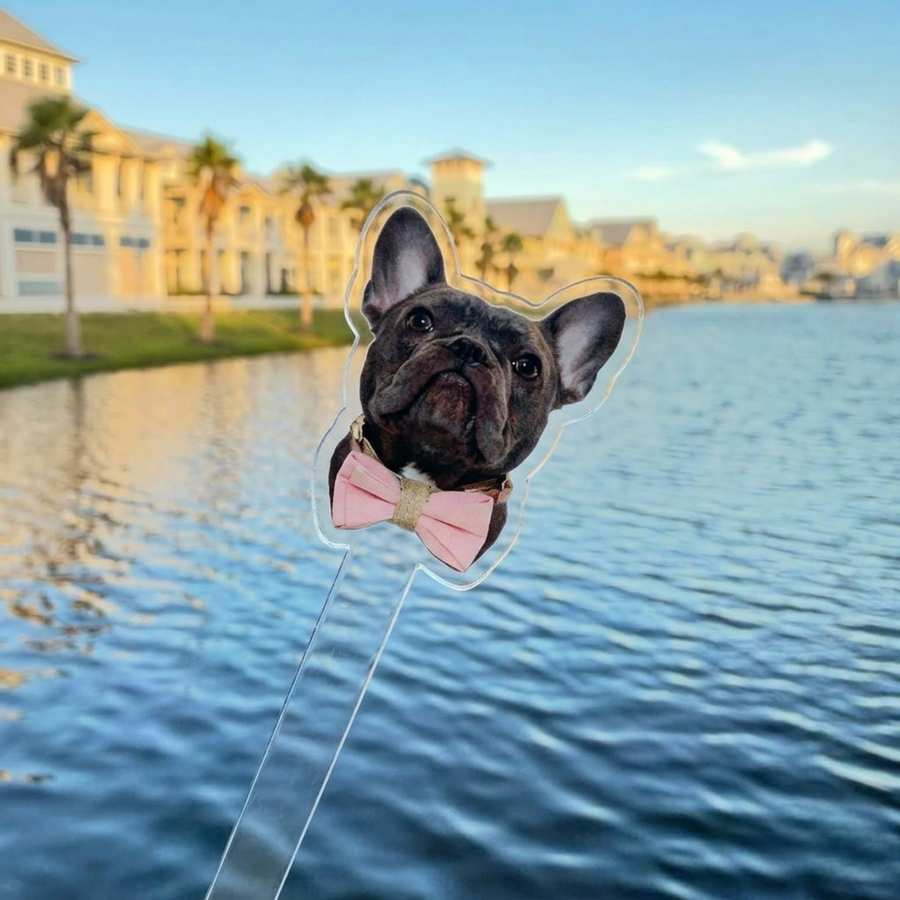
Look at how the artist handles expressions and distinguishing features. Do the dogs have individual character? Can you see a difference between a soft, sleepy expression and an alert one? The style should appeal to you before you ask the artist to draw your own dog.
“I was worried an illustration wouldn't actually feel like Milo, but it was spot on. Guests kept picking up the napkins to look more closely. It felt personal without being overdone, exactly what we wanted.”
Claire W., Charlottesville
The proof is still part of the process. Choosing an illustration does not remove the need to check the likeness, explain an important marking, or point out the expression that feels most familiar.
Compare the design at the size you will use
A portrait enlarged on a laptop is a different viewing experience from the same composition on a drink stirrer. Make an actual-size layout and look at the face, the important markings, and the smallest lettering.
For a photograph, a close crop may work better than a distant full-body image. For an illustration, simplifying background detail may give a distinctive ear or eyebrow more space. Home printing helps you judge the composition and scale, but it does not reproduce the supplier's final materials, inks, or finish.
Ask what the proof shows
For cocktail napkins, ask about the paper and printing method, then look at finished examples with a similar amount of detail. For clear or frosted items, consider how the portrait will appear against the material and the backgrounds it will sit in front of.
A digital proof shows the proposed artwork, layout, and wording. If the finish or an exact color match will decide your purchase, ask what physical samples or production examples are available before approving the order.
Give the artist a useful reference
Choose a clear photograph in which the features you care about are visible. Explain which picture looks most like your dog to you, and point out anything easy to overlook: one folded ear, an uneven white patch, or the gray around the muzzle.

A photograph can be cropped, edited, or presented in black and white; an illustration can be developed around a chosen palette. Put the options beside your invitations and other details. The aim is to coordinate the wedding while keeping the face you know.
How an illustrated set comes together
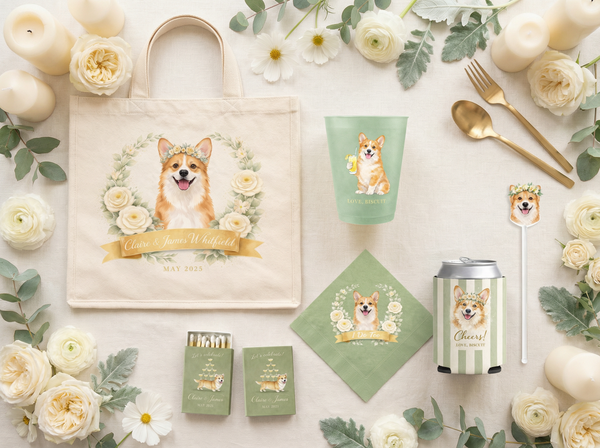
At In Every Chapter, each product is individually illustrated by the same artist. The portrait and layout can suit the item while the style, colors, and recognizable features connect the collection. The Bar Package brings together napkins, acrylic drink stirrers, and frosted cups.
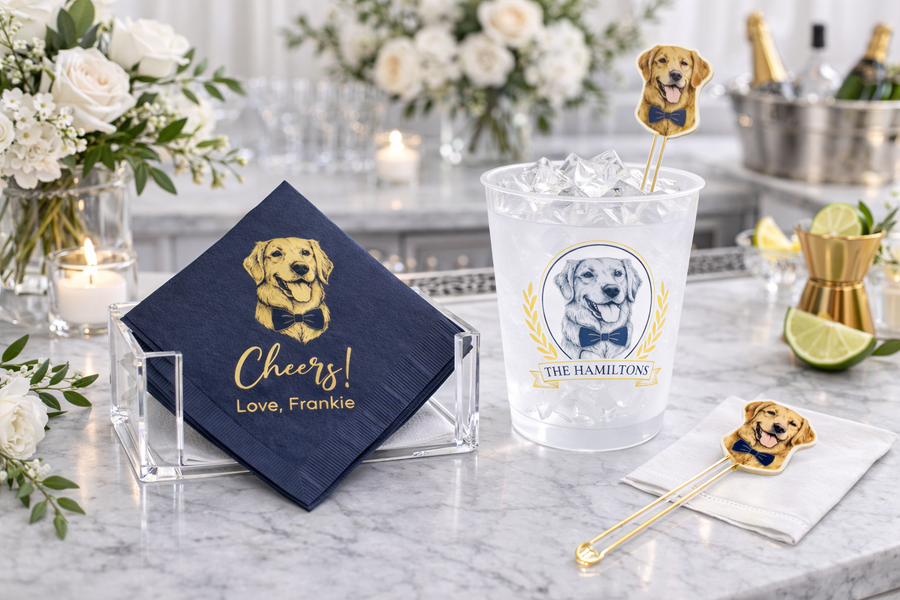
Review the proposed artwork before production, with your reference photos and wedding colors beside you. Check the likeness as carefully as the names, date, and wording.
See an illustrated direction for your own dog
The $10 digital mockup shows three custom illustrations of your dog on a tote, cocktail napkin, and drink stirrer. One revision round is included, and the $10 is credited toward any package order. There is no obligation to order a package afterward.
Use it to assess the likeness and design direction. It is a digital preview, so discuss the physical materials and finish when choosing your items.