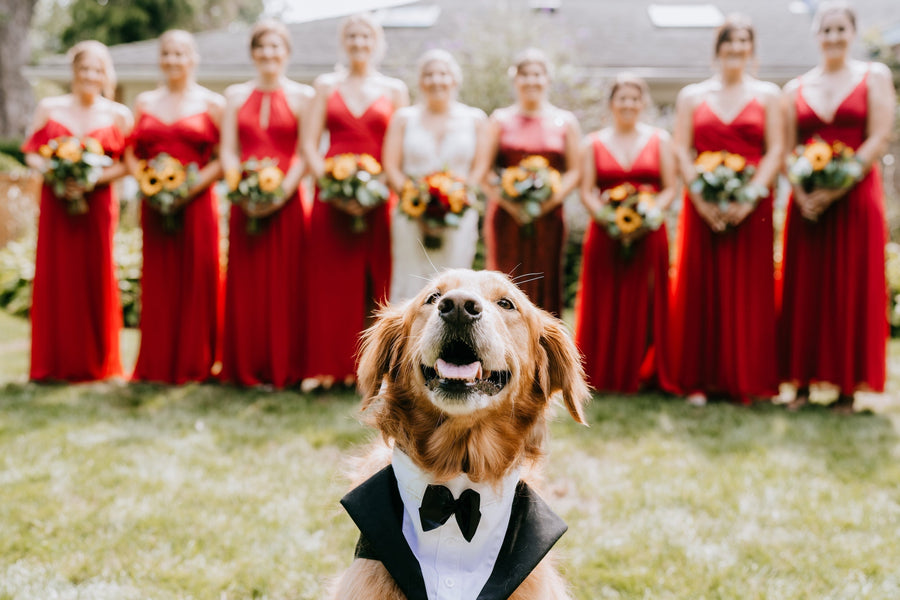
The most useful preparation for dog wedding photos is telling your photographer what matters to you. A relaxed picture of the three of you, a greeting during the first look, and a wedding-party portrait each need a different plan.
Agree on a short shot list, a suitable location, and someone who will handle your dog between pictures. Leave room for the expressions and small interruptions that make the images feel personal, instead of asking the whole session to depend on one perfect pose.
Tell your photographer which moment matters
Pick two or three images you would actually want to keep: the three of you together, a greeting, a short walk, or a close portrait. Share your dog's name, a recent photo, familiar cues, and anything that helps or unsettles them. This gives your photographer something concrete to plan around.
Agree on a short window and a handler who can arrive, help, and leave with the dog. Ask where the session can move if the first location is busy or the weather changes. A little flexibility can be more useful than a long shot list.
“I wrote down that Bea responds to 'here' and ignores 'come,' and that her blue ball is the interesting one. They felt like tiny household details, but I wanted our photographer to know the dog we actually live with.”
Sabine Holt
Find a simple background and usable light
Look beyond the spot where you want to stand. A hedge, wall, or open garden may give you a cleaner frame than an entrance with delivery vehicles behind it. Send location photos to your photographer and ask which setting works at your planned time of day.
For a dark-coated dog, ask the photographer to check that the eyes and expression remain visible. For a pale-coated dog, check that bright light does not erase detail. There is no single time of day that works for every venue; the photographer can balance the location, light, and schedule.
“The fountain was my first choice until I noticed the delivery entrance behind it. I sent our photographer pictures of that spot and a plain garden wall. Looking at the whole frame changed what I thought I wanted.”
Nell Porter
Begin with a calm, familiar interaction
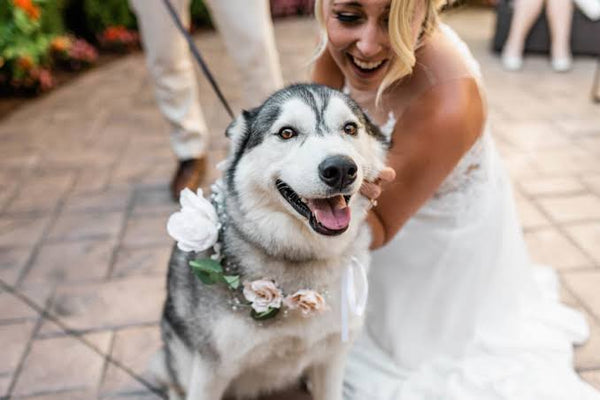
Give your dog a quiet arrival and a chance to settle with the handler. You can start by walking or sitting together rather than immediately asking them to face a camera. If a formal pose becomes frustrating, change the scene or take a break.
Practice familiar cues ahead of the day in manageable settings, but do not make a long stay the price of getting a good picture. A dog on a leash beside the people they know can make a lovely portrait without holding a pose for minutes.
Let one person get their attention
Several people calling names, waving toys, and moving in different directions can make it hard to choose where to look. Let the photographer and handler agree on one person to offer a familiar cue or hold a favorite toy.
Use what your dog already enjoys and stop if they become worried or distracted. Avoid introducing startling sounds simply to get an ear perk. The aim is an expression you recognize, not a reaction at any cost.
Try their eye level, then let the moment move
A lower camera position can bring your dog's face into the story more directly. Ask for a mix: their eye level, a wider frame with the two of you, and a few moments that show how you naturally interact.
Leave space for the imperfect frames. A head leaning into your hand, a crooked sit, or a glance toward the handler may feel more familiar years later than the one photograph where everyone looked at the lens.
Include their portrait when they cannot attend
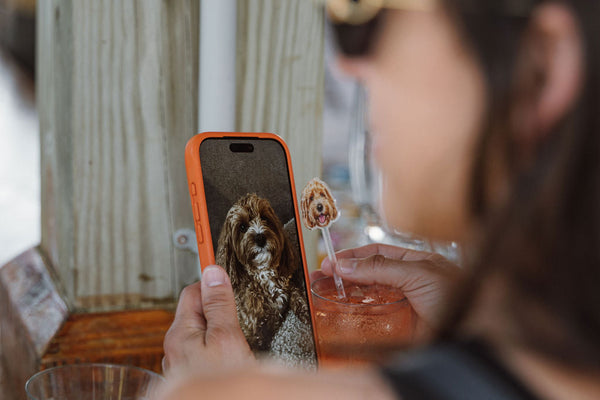
If your dog stays home, ask the photographer to capture the detail you chose for them: a framed picture, a signature drink, or their illustrated face on the bar. Include it on the shot list so it gets photographed intentionally.

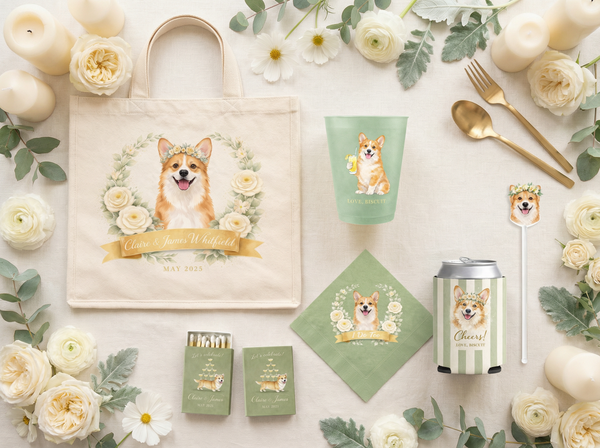
Custom dog drink stirrers can bring their portrait into drinks and bar details, including nonalcoholic service. It is one way to include a familiar face without adding a live visit to the day's schedule.
Give their portrait a place in the details
If your dog cannot join the photos, an illustrated reception detail can still appear in the album. A stirrer carrying their face is a small place to start. Choose the expression you know best, and ask your photographer to include a finished drink in the detail photographs.