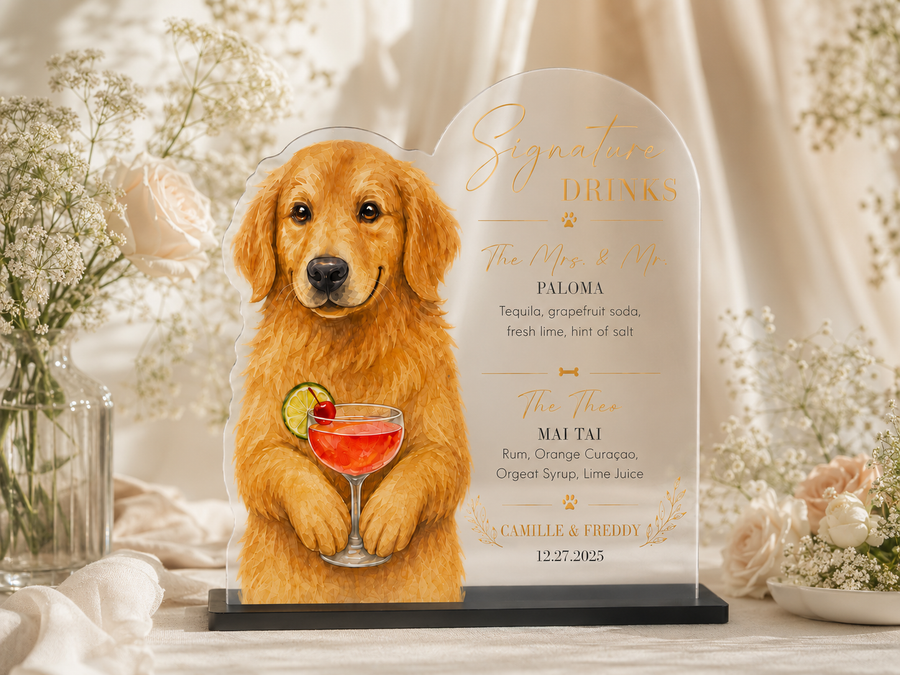
A dog wedding bar sign has two jobs: help guests choose a drink and give the bar a personal focal point. Your dog's portrait can catch the eye while the menu explains what is being served. The strongest design makes room for both.
Start with the drinks and the space available at the venue, then choose the wording, size, and material. A sign that looks beautiful on its own still needs to work once bottles, flowers, glassware, and guests fill the bar.
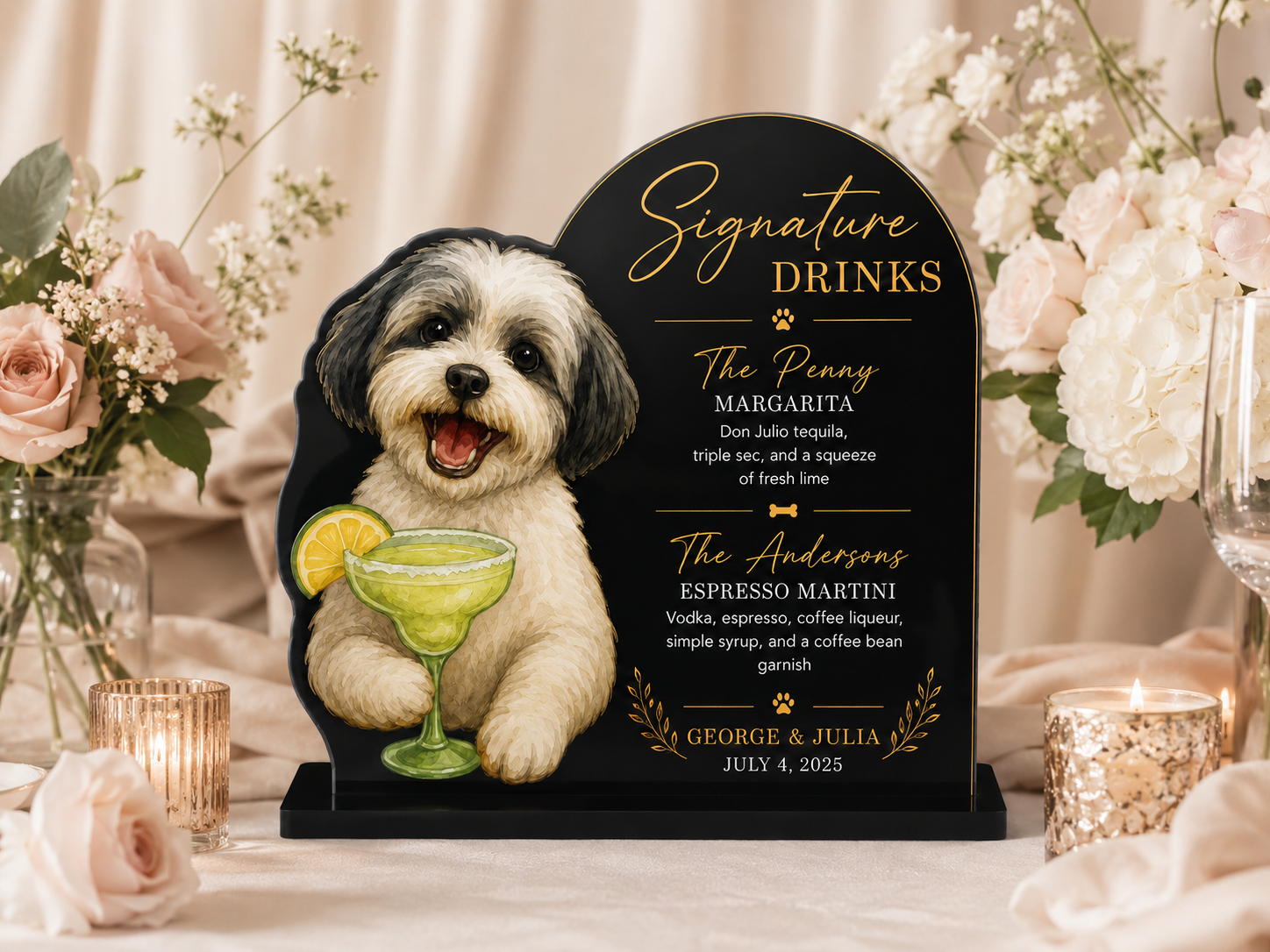
Start with the approved drinks menu
Write down the signature drink names, their main ingredients, and which options are nonalcoholic. Ask your bartender to check that wording against the recipes before the artwork is finalized. This avoids designing around a menu that still needs to change.
A short header such as “Olive's Bar” or “Hosted by Biscuit” can introduce your dog. Follow it with the drink names and brief descriptions. Guests should be able to choose even if they have never met Olive or heard the story behind the name.
For example, a playful name such as “The Counter Surfer” can sit above a plain ingredient list. The name supplies the personality; the description does the practical work.
Give the portrait and lettering room
Keep the drink names easy to find and leave enough space between options. Check the smallest ingredient text before adding another line about your dog, a wedding hashtag, or an extra decorative element.
A useful editing exercise is to cover the border, monogram, and additional wording on a draft. Add back the elements that improve it. A floral design or colorful background can work beautifully when the menu still has a clear place.
Save a longer adoption story for a program, a toast, or another setting where guests have time to read. A familiar name and expression can make the bar sign feel personal.
Test the size where guests will read it
Print a paper version at the proposed dimensions and view it from the approach to the bar. Can you read the ingredients as well as the header? Will a vase or ice bucket hide a line? Could a queue block the sign entirely?
Check the arrangement from the bartender's side too. Agree on the available footprint and any stand or mounting before ordering. Increasing the size may help readability, but only if the bar has room for it.
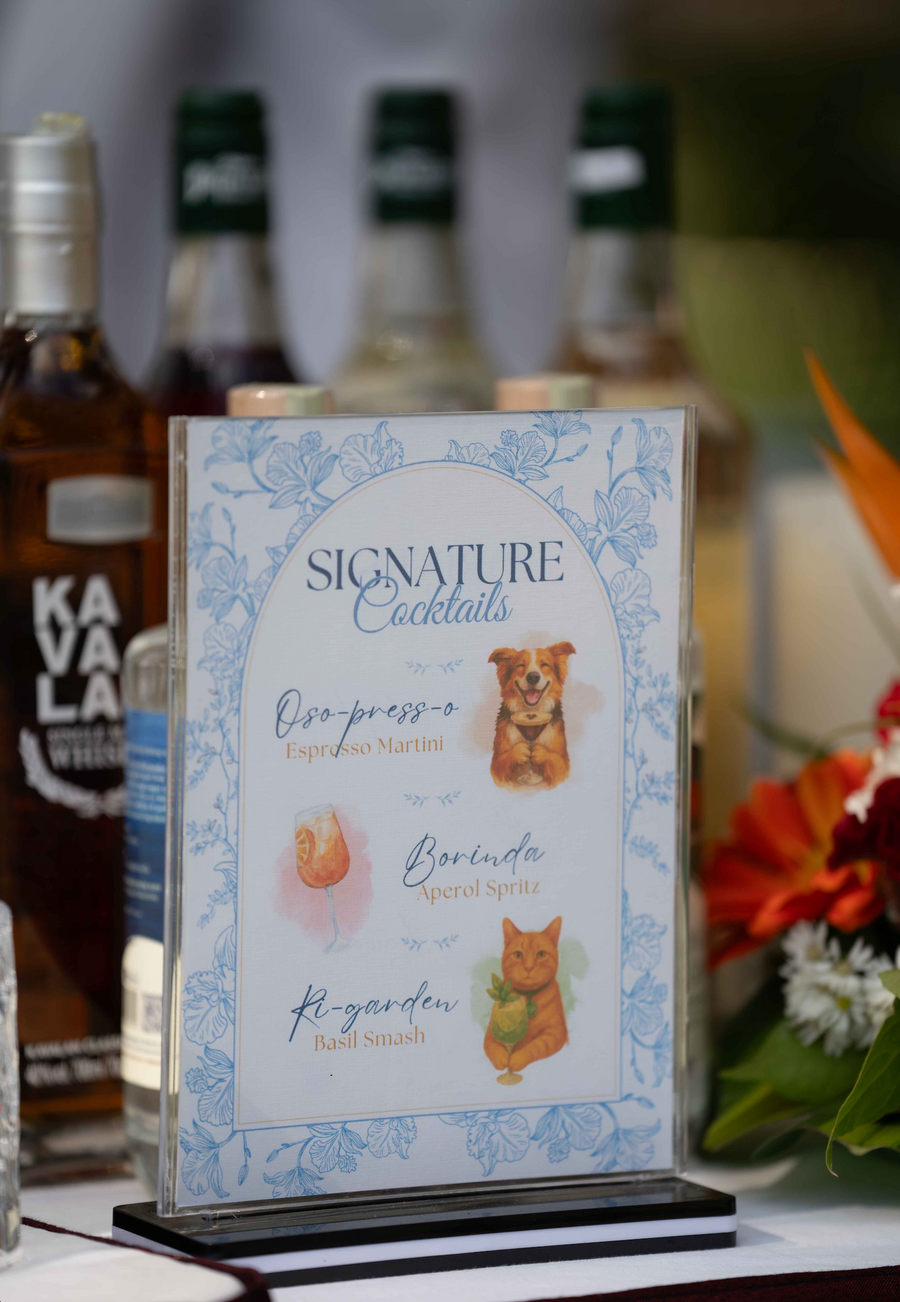
A sign on the front of the bar can be decorative, but waiting guests may obscure it. Keep the working menu where approaching guests can see it, and confirm any hanging or mounting arrangements with the venue.
Choose a material for the setting
Acrylic
Acrylic can suit a clean, modern layout. Consider reflections and the contrast between the lettering and whatever sits behind the sign. Ask the supplier about the support and suitability for your venue's setting.
Wood
Wood adds texture, with the grain becoming part of the design. Compare engraved and printed examples, paying attention to how well small lettering and the portrait remain visible.
Framed print
A framed print gives you flexibility with color, paper, and a frame that relates to the venue. Confirm where it will stand or hang, and make sure the support fits the available space.
Chalkboard
A chalkboard can work when the lettering and illustration are clear at the viewing distance. Look at examples of the lettering artist's menu work and agree on the final wording before the sign is made.
Discuss these design options with suppliers and confirm the specific material, dimensions, and display hardware of the product you choose.
Connect the sign to the rest of the bar
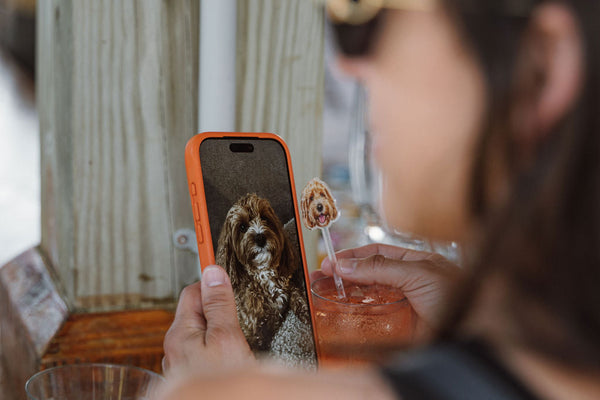
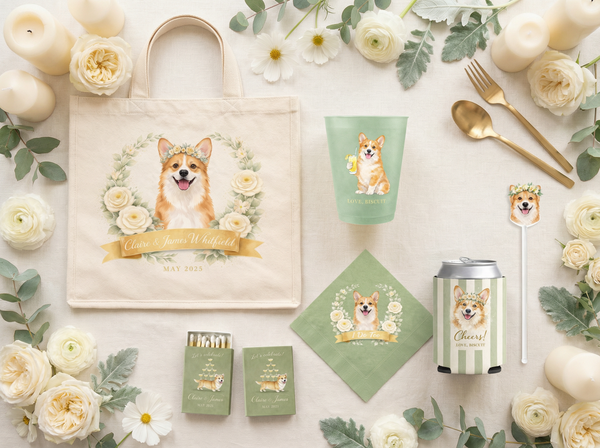
Share the same wedding colors and dog reference photos across the project. Related lettering and recognizable features can connect the sign with napkins, cups, and stirrers while each object has its own composition.
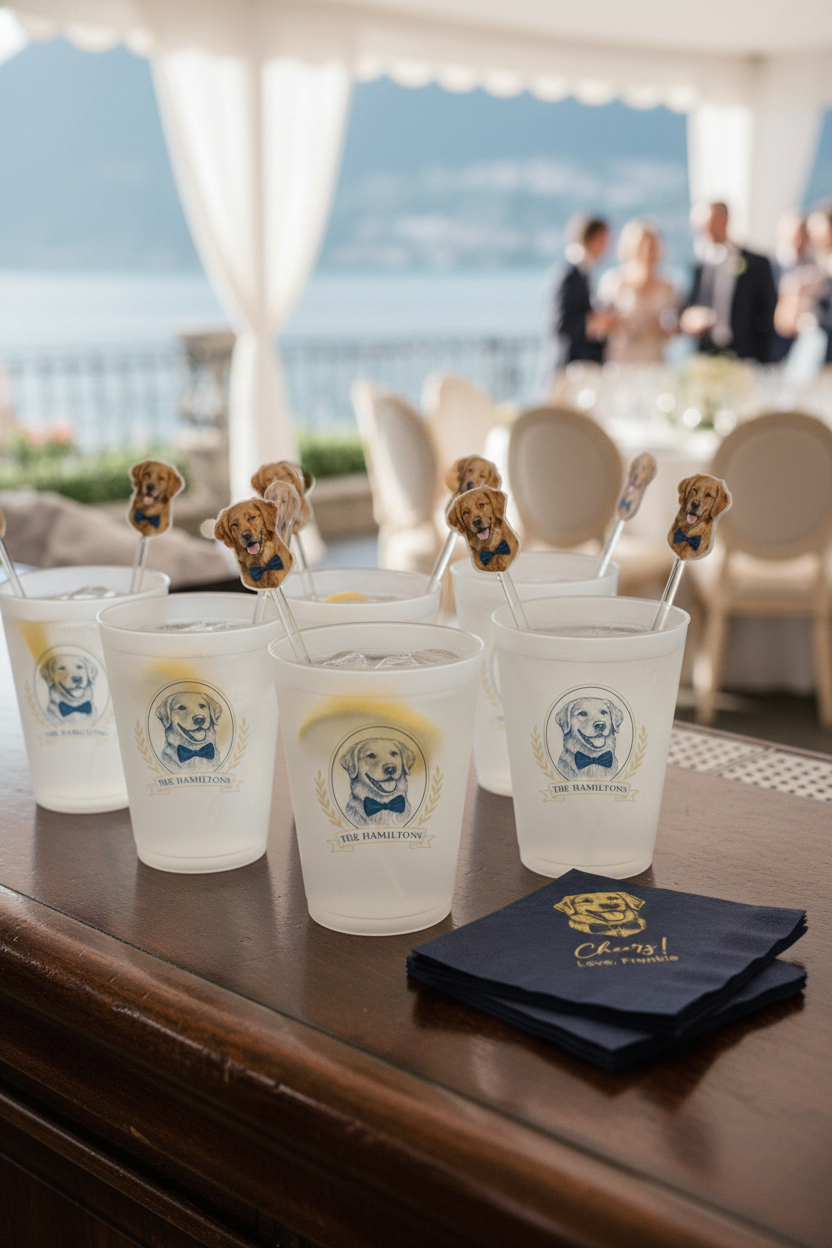
The Bar Package includes napkins, acrylic drink stirrers, and frosted cups. Treat the sign as a separate choice and confirm its options and coordination with the team. Each product is individually illustrated by the same artist.
Turn the menu into your dog's bar sign
Gather the approved drink names and ingredients, a clear photo of your dog, your color direction, and the available display space. Those details give the artist a useful brief and keep the finished sign grounded in the way your bar will operate.
Explore In Every Chapter's acrylic custom dog bar sign and check its current size, options, and display requirements. Choose a design that gives the portrait personality and the menu room to be read.