The useful question is what your particular dog will need when the routine changes, the room fills up, and you are busy getting married. A plan for a sociable adult dog may look very different from one for a restless puppy.
These eight situations can help you choose a smaller role, prepare the person caring for your dog, or decide that home is the better setting. Start with the scenario that sounds familiar, then build the rest of the day around a realistic plan.
1. The dog unsettled by wedding preparation
A house full of deliveries, people getting ready, and furniture moving may be an unfamiliar start to the day. Plan a familiar place and person for your dog during setup, then decide whether a later visit would suit them.
Share the arrival plan with the handler so the dog does not spend the quiet window waiting in a busy entrance. If the schedule runs late, the care plan should still work.
“She spent the whole morning watching us move furniture and decided something terrible was happening. We sent her to my mother's and she arrived to a finished room. Completely different dog.”
Tessa Whitcomb
2. The dog who needs a break at an inconvenient moment
Put toilet breaks and access to water into the plan, along with an easy route out. Give the handler your dog's usual routine rather than creating a special fasting or exercise rule for the wedding.
Make it clear that the handler can step away when needed. Leaving a ceremony briefly is easier to manage when everyone already knows where the dog is going and who is responsible.
3. The puppy who will not settle
A long ceremony may ask more than your puppy is ready for. A short portrait visit or greeting can give them a smaller role. Build the morning around care and activity appropriate to that puppy, rather than trying to exhaust them into staying still.
The person supervising them should have a place to leave the crowd. Treat any quiet activity as something to supervise, not a promise that you will get a fixed number of minutes for the vows.
4. The dog interested in flowers and food
Tell the florist and caterer your dog may be present. Keep arrangements, food, and drinks out of their reach, and skip accessories they are likely to chew. Ask your vet about any specific plant or food concern instead of assuming a decorative item is suitable for a dog.
Give the handler a clear rule about guests offering treats. It is easier to share that message once than to rely on every guest knowing what your dog normally eats.
5. The dog with health needs
A recovery, diagnosis, or mobility issue changes the planning conversation. Ask your vet about the specific travel, environment, and length of visit before deciding on a role. A photo visit is not automatically appropriate just because it is short.
If attending is not suitable, use an existing photograph, a mention in the ceremony, or an illustrated detail. The wish to have them close does not require a trip to the venue.
6. Two dogs with different needs
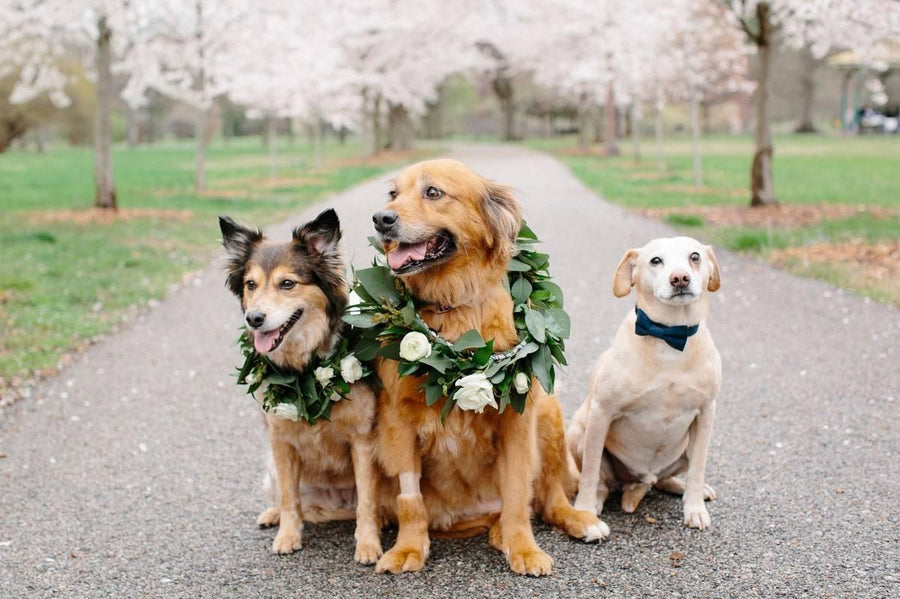
Make a plan for each dog. One may enjoy greetings while the other needs a quiet space, or they may need separate arrivals. Discuss how many handlers are needed for the dogs and activities you have chosen.
“Poppy wants to greet everyone. Gus wants to stand behind my legs and inspect the situation. Calling them 'the dogs' on our timeline hid the fact that they needed completely different things, so we wrote a separate plan for each.”
Elliot Moreno
Include separate equipment, transport arrangements, and an option for one dog to leave without forcing the other dog's plan to change.
7. The dog who wants to rush down the aisle
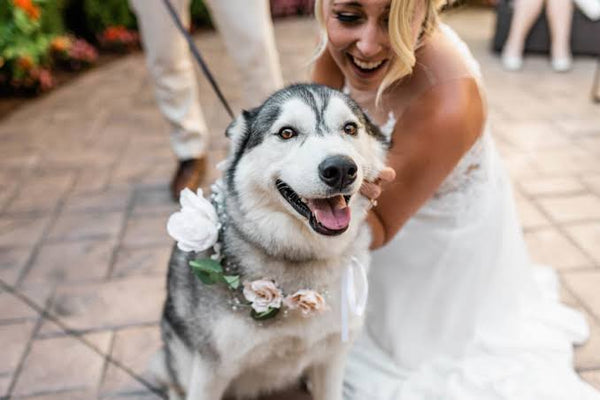
A familiar person at the other end of an aisle can be very exciting. Rehearse with a handler who can comfortably manage your dog and choose an entrance that allows them to walk together under control.
If the walk does not suit your dog, meet for portraits instead. You can keep the greeting and its emotion without building a ceremony around an uncontrolled sprint.
8. The dog who joins in with the speeches
A dog who reacts to applause, raised voices, or excitement may find speeches and dancing a difficult stretch. Decide on the departure time around their needs, with permission for the handler to leave sooner.
Keep the overnight bag, house key, and contact details with the person making the journey. 'Going home after photos' only becomes a complete plan when someone knows how it will happen.
Choose the version that suits your dog
The useful outcome is a role your dog can manage and a plan you can hand over. That may be a brief appearance, separate visits for two dogs, or no venue visit at all.

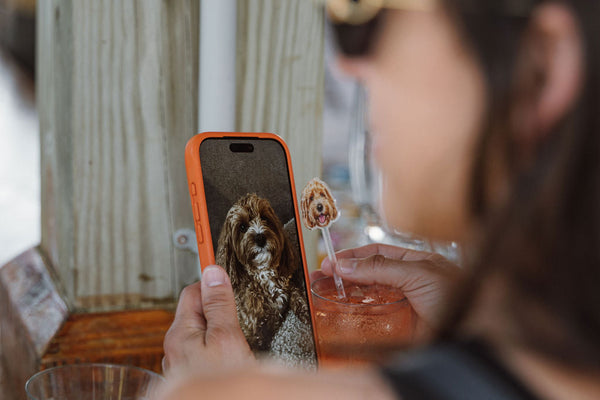
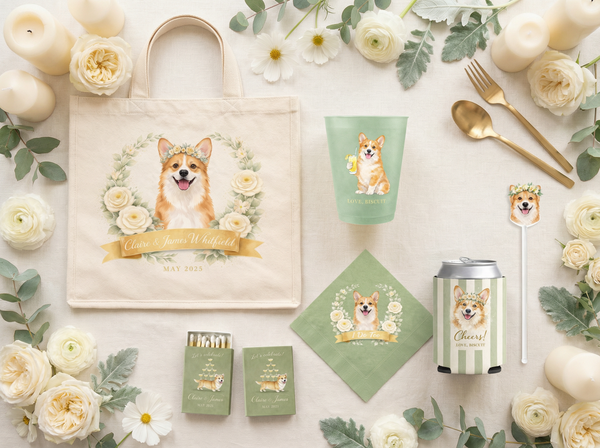
A portrait on the Bar Package can carry their face into the reception after they leave or while they stay home. Choose it if those items fit the drinks service, rather than adding them simply because you changed the attendance plan.
Let the reception details carry their story
Your dog might join you briefly or skip the venue altogether. If you want a portrait to continue through cocktail hour, explore the bar pieces that suit your service. The practical plan and the personal details can support each other without extending the time your dog spends at the wedding.